La Madama is a type of statue representing a middle-aged, heavy-set woman of African descent, dressed in 19th century house-clothes as a domestic worker, cook, or servant.
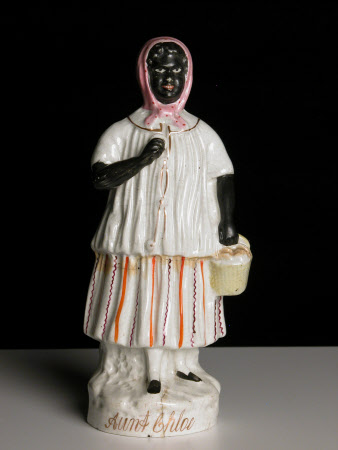
In America they are often called "Aunt Chloe" figures, after the wife of the title character in the 1852 anti-slavery novel "Uncle Tom's Cabin" by Harriet Beecher Stowe. Pairs of ceramic Uncle Tom and Aunt Chloe figures used to be made for mantelpiece decor. Aunt Chloe was a cook, and she is usually depicted with a food basket.
Here is an Aunt Chloe statue from the 19th century:
Uncle Tom and Aunt Chloe figures were popular in other nations as well as the United States, due to the world-wide popularity of the book "Uncle Tom's Cabin," which was said at the time to be the most important convincer to people that slavery was wrong. Even after slavery officially ended in America in 1863, the book remained a consistent seller and gave rise to numerous stage-play productions.As late as the 1930s, these plays were still being "quoted" in movies that had nothing to do with slavery or its history, but were, instead, fictions about theatrical life. Even Shirley Temple did a turn as Little Eva in a play-within-the-play segment of the 1936 movie "Dimples."
Here is an Uncle Tom and Little Eve statue made in England:

After the end of slavery, Black women in America were often employed in the food industry or as domestics. The old Uncle Tom and Aunt Chloe figures were titled as The Butler and Mammy. To some people, these would also be known as Aunt Jemima and Uncle Mose (see below):

Eventually, as fewer households employed butlers, The Butler (sometimes called Uncle Mose) was replaced with a new figure, The Chef. The Chef, like Aunt Chloe and Mammy figures, is a cook. Mammy and Chef figures usually have both hands on their hips. Sometimes they hold a spoon in one hand as well.
Here is a Chef and Mammy pair of salt and pepper shakers from the mid 20th century:

The Chef and Mammy became such well known icons that they lent themselves to commercial imagery as the logo-characters for brands of food. The Chef became "Rastus, The Cream of Wheat Man" and "Mammy" became "Aunt Jemima," purveyor of Pancake mix.
Here is an image of Rastus the Cream of Wheat Man, modelled by the actual chef Frank L. White (1867 - 1938), an American citizen born in Barbados:

Here is a package of Aunt Jemima Pancake Mix:

Here is a modern hands-on-hips version of the old Aunt Chloe / Mammy / Aunt Jemima figure sold in a Cuban-American Santeria-oriented shop under the name "La Madama":

Here is another La Madama statue, holding a broom, as befits her role as a domestic servant:

Okay, now that you understand that these statues were not originally *created* as La Madama figures, but are re-purposed statuary designs that have carried various names over the past century and a half, you will understand that they do not represent one spirit, in the way that a Catholic saint statue does. La Madama is a collective *type* of spirit, and old slave grandmother who works as a cook or cleaning woman, and who is proficient at reading cards. In Cuba she is known as La Madama, but in the United States she is a "Black Gypsy" or "Coloured Fortune Teller." Here is a picture called "the Card Reader," painted in 1899 by the American Artist Harry Roseland depicting such a Black woman reading cards for her young, White client:

To learn more about La Madama spirits and how those in the Lukumi, Espiritismo, and Santeria religions contact and work with them, please read this page at the Association of Independent Readers and Rootworkers:
http://readersandrootworkers.org/wiki/La_Madama

